
good friday liturgy catholic pdf
Good Friday Liturgy in the Catholic Church: A Comprehensive Guide
Good Friday holds profound significance, commemorated with a unique liturgy reflecting Christ’s passion; resources, including PDF guides, aid understanding and participation in this solemn observance.
Historical Development of the Good Friday Liturgy
Historically, the Good Friday liturgy evolved significantly from early Christian commemorations of Christ’s Passion. Initial observances, lacking a formalized structure, centered on scriptural readings and prayers recalling the events of Calvary. Over centuries, these practices gradually coalesced into a more defined liturgical form.
Early Church Fathers, like Tertullian and Cyprian, documented somber observances, emphasizing penance and mourning. By the 4th century, Jerusalem’s veneration of the Cross became a central element, influencing liturgical developments elsewhere. The medieval period witnessed the emergence of elaborate Passion plays and processions, enriching the liturgical experience.
The Council of Trent (1545-1563) standardized many aspects of the Roman Rite, including the Good Friday liturgy. Subsequent liturgical reforms, particularly following Vatican II, aimed to restore a deeper theological understanding and promote active participation. PDF resources detailing these historical shifts offer valuable insights into the liturgy’s evolution, aiding comprehension of its current form and significance.
Theological Foundations of Good Friday
Theologically, Good Friday commemorates the culmination of Christ’s salvific mission – his sacrificial death on the Cross. This event isn’t merely a historical tragedy, but the pivotal moment of redemption for humanity, overcoming sin and opening the path to eternal life. Catholic doctrine emphasizes that Christ willingly embraced suffering, fulfilling Old Testament prophecies and demonstrating ultimate love.
The liturgy reflects this profound theology through readings from Scripture, particularly the Passion narratives, and the veneration of the Cross itself. This act isn’t worship of a mere instrument of torture, but recognition of Christ’s victory over death. The absence of Mass underscores the finality of Christ’s sacrifice, awaiting its completion at Easter.
Understanding these theological underpinnings enriches participation in the Good Friday liturgy. PDF guides often delve into these concepts, providing theological explanations and scriptural context, fostering a deeper appreciation for the mystery of Christ’s Passion and its enduring significance for believers.
The Absence of Mass on Good Friday
Unlike other days in the liturgical year, the Catholic Church does not celebrate Mass on Good Friday. This deliberate omission isn’t a lack of reverence, but a profound theological statement. The Eucharist, commemorating the Last Supper and anticipating the resurrection, is suspended as the Church directly participates in Christ’s sacrifice already completed on Calvary.
The liturgy focuses instead on the Passion of Christ, the veneration of the Cross, and anticipation of the Easter vigil. This emphasizes the unique nature of Good Friday as a day of penance, mourning, and solemn remembrance. The liturgical actions reflect a state of waiting and anticipation, mirroring the disciples’ grief and hope.
PDF resources detailing the Good Friday liturgy often explain this absence, clarifying its theological rationale. These guides highlight that Communion is distributed, but using hosts consecrated on Holy Thursday, further emphasizing the connection to the Last Supper and the ongoing presence of Christ’s sacrifice.
The Three Parts of the Good Friday Liturgy
The Good Friday liturgy is structured into three distinct, yet interconnected parts, each deepening the faithful’s participation in Christ’s Passion. First, the Liturgy of the Word presents Old and New Testament readings detailing the prophecies of suffering and the Gospel accounts of Jesus’ crucifixion. These scriptures establish the context and meaning of the sacrifice.
Secondly, the Veneration of the Cross invites the faithful to physically and spiritually acknowledge Christ’s sacrifice. The cross is unveiled, presented, and adored through a specific response – “We adore you, O Christ, we adore you” – fostering a personal encounter with redemption.
Finally, Holy Communion, utilizing hosts consecrated on Holy Thursday, is distributed, not as a full Mass, but as a sacred meal connecting believers to Christ’s sacrifice. PDF liturgical guides often visually map these sections, aiding understanding of the flow and symbolism inherent in each part.
Part 1: Liturgy of the Word
The initial segment of the Good Friday liturgy, the Liturgy of the Word, centers on scriptural readings designed to profoundly immerse the congregation in the narrative of Christ’s Passion. This portion typically features selections from the Old Testament, revealing prophecies foreshadowing the Messiah’s suffering and sacrifice. These readings establish a historical and theological foundation.
Following the Old Testament passages, the New Testament accounts of the Passion – often drawn from Matthew, Mark, Luke, or John – are proclaimed, vividly recounting the events leading to Jesus’ crucifixion. These Gospel narratives provide a direct and powerful witness to Christ’s suffering.
PDF liturgical resources often include the complete text of these readings, alongside commentary, facilitating deeper reflection. The culmination of this section leads into the Prayers of Intercession, preparing the faithful for the subsequent veneration of the Cross.
Readings for Good Friday
Good Friday’s scriptural selections are meticulously chosen to convey the weight of Christ’s sacrifice and God’s redemptive plan. Accessing a PDF of the liturgical texts reveals the specific readings appointed for the day, typically including Isaiah 52:13-53:6, detailing the suffering servant, and Psalm 22, a lament reflecting Christ’s abandonment.
The New Testament component invariably features a detailed Passion narrative – often from John’s Gospel – presenting a poignant account of Jesus’ trial, condemnation, and crucifixion. These readings aren’t merely historical retellings; they are invitations to enter into the mystery of Christ’s suffering.
PDF resources often provide contextual notes, enhancing understanding of the historical setting and theological significance of each passage. Careful study of these readings prepares the faithful for a deeper participation in the subsequent parts of the liturgy.
Old Testament Prophecies
The Good Friday liturgy intentionally connects Christ’s Passion to the prophecies of the Old Testament, demonstrating God’s consistent plan of salvation throughout history. A PDF of the liturgical readings will showcase selections like Isaiah 52:13-53:6, powerfully foreshadowing the suffering servant—widely interpreted as a prefiguration of Jesus.
These prophecies aren’t presented as coincidences, but as evidence of divine providence. They reveal how God prepared humanity for the arrival of the Messiah and the nature of His redemptive act. Psalm 22, with its vivid depiction of abandonment and suffering, also resonates deeply with the events of the crucifixion.
Studying these Old Testament passages, often available in PDF format with accompanying commentary, illuminates the profound continuity between the Old and New Covenants, enriching the understanding of Christ’s sacrifice.
New Testament Accounts of the Passion
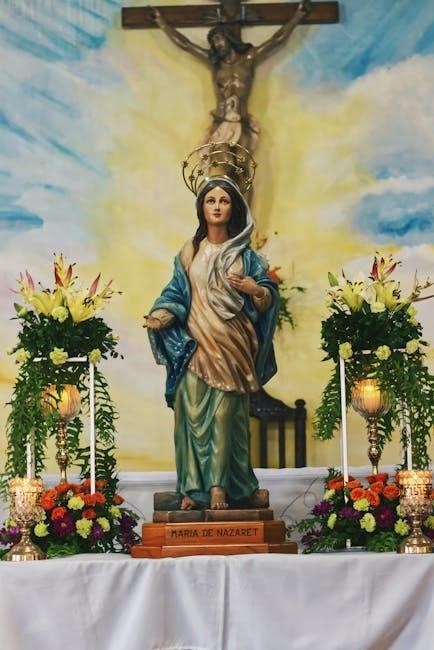
Central to the Good Friday liturgy are the readings from the New Testament, specifically detailing the Passion narratives from the Gospels. A readily available PDF resource will contain selections typically drawn from Matthew, Mark, Luke, or John, offering distinct perspectives on Jesus’ final hours.
These accounts vividly portray the betrayal, arrest, trial, scourging, and crucifixion of Jesus, emphasizing His obedience to the Father’s will and His selfless love for humanity. The reading of the Passion is often done in a dramatic fashion, with different voices representing various characters.
Accessing a PDF version allows for personal reflection on the details of Christ’s suffering. The narratives underscore the gravity of sin and the immense cost of redemption, prompting believers to contemplate the depth of God’s sacrifice.
Prayers of Intercession
Following the readings, the Good Friday liturgy features a series of solemn Prayers of Intercession, also known as the General Intercessions. A downloadable PDF guide often provides the specific intentions for these prayers, covering a broad range of needs and concerns.
These prayers are offered for the Church, the Pope, clergy, laity, those preparing for baptism, unity among Christians, those who do not believe in Christ, those who govern, those in need, and the deceased. Each intention is typically followed by a response, such as “Lord, hear our prayer.”
The intercessions acknowledge the universality of Christ’s saving work and invite the faithful to participate in His ongoing mission of reconciliation. A PDF resource allows for focused prayer and deeper engagement with the needs of the world, mirroring Christ’s compassion;
Part 2: Veneration of the Cross
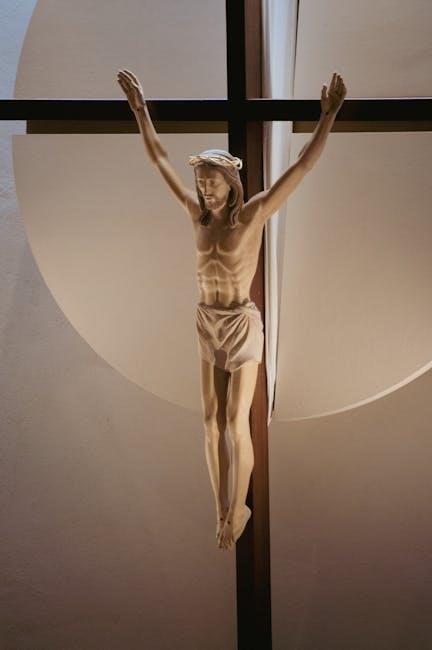
The second part of the Good Friday liturgy centers on the Veneration of the Cross, a profoundly moving ritual. A PDF guide detailing the ceremony often illustrates the presentation of the cross, typically a large, unadorned wooden cross. The priest unveils it, chanting “Behold the wood of the cross, on which hung the salvation of the world.”
The congregation responds with “We adore you, O Christ, we adore you,” a powerful expression of faith and reverence. Individuals then approach the cross to venerate it—typically by kissing it—expressing their gratitude for Christ’s sacrifice.
This act of veneration isn’t adoration of the wood itself, but of Christ who died upon it. A PDF resource can explain the theological significance, emphasizing the cross as a symbol of redemption and God’s love. The solemnity and silence enhance the experience.
The Presentation of the Cross
The heart of the Veneration of the Cross lies in its presentation, meticulously outlined in liturgical PDF guides. Initially veiled, the cross is revealed gradually, building anticipation and reverence. The priest unveils it, often chanting, “Behold the wood of the cross, on which hung the salvation of the world.” This proclamation invites the faithful to contemplate Christ’s sacrifice.
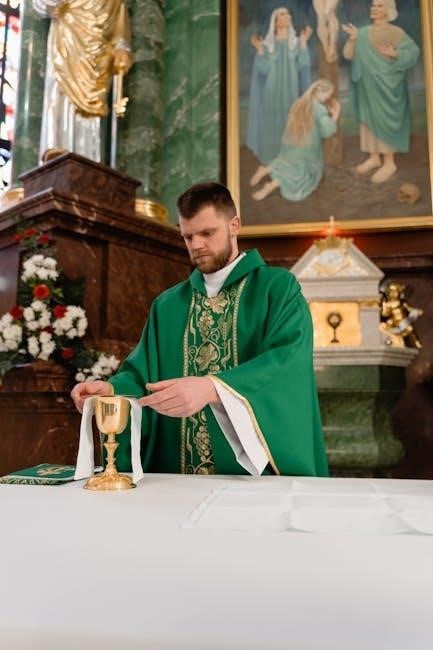
A PDF resource detailing the ceremony will show the cross is typically unadorned, emphasizing its stark reality as an instrument of suffering and redemption. The presentation isn’t merely a visual act; it’s a symbolic offering of Christ’s body.
The priest then elevates the cross at intervals, allowing the congregation to view and venerate it. Detailed PDF instructions often specify the proper gestures and prayers accompanying this solemn moment, fostering a deeper connection with the Passion.
The Response: “We Adore You, O Christ, We Adore You”
Following each elevation of the cross during the Veneration, the congregation responds with the powerful acclamation, “We adore you, O Christ, we adore you.” This antiphon, readily available in liturgical PDF resources, isn’t simply a recited phrase, but a profound act of worship and recognition of Christ’s divinity.
PDF guides often detail the musical setting of this response, encouraging congregational singing to amplify the collective adoration. The repetition emphasizes the complete surrender and reverence due to the crucified Lord. It’s a moment of unified faith, acknowledging Christ’s sacrifice as the ultimate expression of love.
The structure of the response, as outlined in official liturgical PDF documents, is intentionally simple, allowing all participants to join in heartfelt devotion. It’s a cornerstone of the Good Friday liturgy, encapsulating the core message of redemption.
Significance of the Cross in Catholic Theology
Within Catholic theology, the Cross isn’t merely a symbol of suffering, but the very instrument of salvation, a central tenet detailed in numerous liturgical PDF resources. It represents Christ’s ultimate sacrifice, reconciling humanity with God, and overcoming sin and death.
PDF guides often explain how the Cross embodies both divine love and human frailty. It’s a reminder of God’s willingness to become human and endure suffering for the sake of humankind. The veneration of the Cross during the Good Friday liturgy isn’t about glorifying pain, but acknowledging the transformative power of self-sacrificing love.
Further exploration within theological PDF documents reveals the Cross as a foreshadowing of the Resurrection, signifying hope and eternal life. It’s a potent symbol of victory over evil, and a call to discipleship, urging believers to take up their own crosses daily.
Part 3: Holy Communion with Reserved Sacrament
The final section of the Good Friday liturgy centers on Holy Communion, uniquely administered using hosts consecrated on Holy Thursday, as detailed in liturgical PDF guides. This practice underscores the connection between the Last Supper and Christ’s sacrifice on the Cross, emphasizing the Eucharist as a participation in that singular event.
PDF resources clarify that, unlike regular Mass, there is no consecration of the Eucharist on Good Friday. Instead, the reserved sacrament—already consecrated—is distributed as a sign of spiritual nourishment and communion with Christ’s suffering. This solemn distribution isn’t a celebration, but a reverent reception of grace.
The act of receiving Communion on Good Friday, explained within these PDF documents, is a profound expression of faith, uniting the faithful with Christ’s sacrifice and offering solace during a time of mourning and reflection. It’s a powerful reminder of redemption.
Distribution of the Eucharist
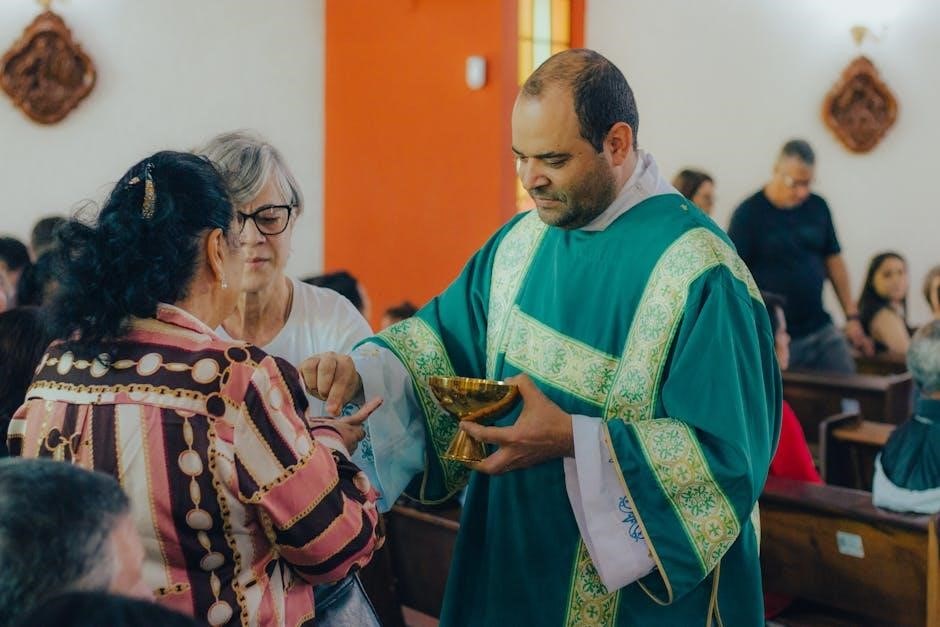
The distribution of the Eucharist on Good Friday, meticulously outlined in available liturgical PDF guides, differs significantly from typical Mass celebrations. Hosts consecrated during the Holy Thursday evening Mass of the Lord’s Supper are used, emphasizing the unbroken continuity between the institution of the Eucharist and Christ’s sacrifice.
These PDF resources detail that the priest or deacon distributes Communion in silence, fostering a contemplative atmosphere. There are no accompanying joyful hymns or customary greetings; the focus remains firmly on the solemnity of the occasion and the weight of Christ’s suffering.
The faithful receive Communion with reverence, often kneeling, acknowledging their participation in Christ’s passion. PDF instructions emphasize that this is not a full celebration of the Mass, but a sacred communion rooted in the events of Good Friday, a powerful sign of hope and redemption.
The Use of Hosts Consecrated on Holy Thursday
A crucial element detailed in PDF liturgical guides concerning Good Friday is the specific use of hosts consecrated during the Holy Thursday Mass of the Lord’s Supper. This practice underscores the intimate connection between the Last Supper, Christ’s sacrifice on the cross, and the Eucharist as the memorial of that sacrifice.
These PDF documents explain that the hosts are reserved specifically for distribution on Good Friday, representing the Body of Christ offered for the salvation of humanity. This deliberate choice avoids a re-consecration, maintaining the unbroken line of sacrifice from Thursday to Friday.
The liturgical norms, readily available in PDF format, emphasize the profound symbolism of utilizing the hosts from Holy Thursday, reinforcing the understanding that Good Friday is not a separate event, but a continuation of the Paschal Mystery initiated on the evening before. It’s a powerful visual and sacramental link.
Communion as Participation in Christ’s Sacrifice
PDF liturgical resources clearly articulate that receiving Communion on Good Friday isn’t a celebration, but a deeply solemn participation in Christ’s ultimate sacrifice for humanity’s redemption. It’s a sharing in the very act of love that unfolded on Calvary.
These guides emphasize that the Eucharist distributed on Good Friday isn’t a full Mass; therefore, Communion is received outside of the context of a Eucharistic celebration. It’s a reverent reception of the pre-consecrated hosts, a tangible connection to the sacrifice.
PDF documents detail how this act of receiving Communion is a profound expression of faith and a personal encounter with the crucified and risen Lord. It’s an invitation to internalize Christ’s suffering and to commit to living a life of selfless love, mirroring His sacrifice. The PDFs also highlight the importance of silent prayer and reflection during this time.
Good Friday Observances Beyond the Liturgy
PDF liturgical guides often extend beyond the formal liturgy, detailing traditional observances that deepen the Good Friday experience. The Stations of the Cross, a powerful devotional practice, is frequently outlined, with downloadable booklets available as PDFs for personal or communal prayer.
These resources emphasize the importance of fasting and abstinence, not merely as rules, but as acts of solidarity with Christ’s suffering and a purification of the heart. PDFs provide guidance on appropriate levels of fasting for different individuals.
Furthermore, many PDFs encourage acts of penance, such as increased prayer, almsgiving, and pilgrimage (even a spiritual one), as ways to participate in Christ’s redemptive work. They highlight that Good Friday isn’t simply a day for mourning, but a call to transformative action and renewed commitment to Gospel values.
The Stations of the Cross
PDF resources dedicated to the Good Friday liturgy invariably include detailed guides for the Stations of the Cross, a central devotional practice. These PDFs often present the traditional fourteen stations, each depicting a specific event from Jesus’ Passion, accompanied by prayers, meditations, and scripture readings.
Many downloadable PDF booklets offer variations, such as the Scriptural Stations, which focus more directly on biblical accounts. Some parishes provide customized PDF guides reflecting local traditions or incorporating reflections from their bishop or pastor.
The PDFs emphasize the Stations as a journey of empathy with Christ, inviting believers to walk in his footsteps and contemplate his suffering. They often include instructions for leading the Stations communally, suggesting music, readers, and responses, making it a deeply immersive and spiritually enriching experience.
Fasting and Abstinence
PDF guides detailing the Good Friday liturgy consistently highlight the Church’s call to fasting and abstinence. These downloadable resources explain that Good Friday is a day of penance, urging Catholics to abstain from meat and observe a fast – limiting the amount of food consumed. The PDFs often clarify the specific requirements, noting exceptions for those with medical conditions or other legitimate reasons.
Many PDF documents connect fasting and abstinence to the themes of sacrifice and solidarity with Christ’s suffering. They emphasize that these practices are not merely external rules, but opportunities for spiritual growth and conversion.
Furthermore, some PDFs provide suggestions for alternative forms of penance, such as giving up other comforts or dedicating time to prayer and acts of charity, reinforcing the spirit of self-denial central to Good Friday observance.

Acts of Penance and Pilgrimage
PDF resources on the Good Friday liturgy frequently detail traditional acts of penance beyond fasting and abstinence. These downloadable guides often suggest specific prayers for reconciliation and forgiveness, encouraging deeper reflection on personal sin and the need for redemption. Many PDFs emphasize the importance of confession as a vital component of Good Friday preparation.
Historically, pilgrimage to holy sites was a significant act of penance. While less common today, some PDF documents mention the spiritual value of visiting churches, especially those housing relics associated with the Passion of Christ.
Contemporary PDFs also suggest acts of service and charity as meaningful penances, aligning with Christ’s call to love and compassion. These resources underscore that penance isn’t solely about self-denial, but about transforming hearts and extending mercy to others, mirroring God’s own forgiveness.
Variations in Liturgical Practices
PDF guides detailing the Good Friday liturgy acknowledge regional and cultural variations in practice. While the core elements remain consistent, specific customs differ across dioceses and even individual parishes. Some PDFs highlight variations in the musical selections used during the service, reflecting local traditions.
Historically, liturgical reforms have influenced these practices. Older PDF documents may showcase pre-Vatican II customs, contrasting with contemporary liturgical norms detailed in newer resources. These changes often relate to the presentation of the cross and the style of intercessory prayers.
Furthermore, PDFs sometimes illustrate how different Catholic rites – Roman, Byzantine, etc. – observe Good Friday uniquely. Understanding these nuances requires consulting resources specific to each rite, often available as downloadable PDFs from relevant archdioceses or liturgical commissions.
Regional Differences in Good Friday Celebrations
Numerous PDF resources showcase the diverse ways Good Friday is observed globally within the Catholic Church. In some regions, particularly in Europe and Latin America, elaborate processions with statues depicting the Passion of Christ are common, details often found within downloadable PDF guides.
Conversely, other areas, like parts of the United States, may emphasize a more restrained and contemplative liturgy, as outlined in diocesan PDFs. These documents frequently detail specific local customs, such as the use of particular hymns or devotional practices.
PDF archives from various dioceses reveal differences in the length and style of the intercessions, and even the manner of venerating the cross. Examining these regional PDFs provides valuable insight into the rich tapestry of Catholic tradition and its adaptation to local cultures.
Liturgical Reforms and Their Impact
Post-Vatican II reforms significantly reshaped the Good Friday liturgy, details comprehensively documented in numerous PDF publications from the Vatican and various dioceses. These PDFs illustrate the shift away from a focus on retribution and towards an emphasis on Christ’s redemptive suffering and God’s boundless love.
Prior to the reforms, the liturgy included prayers considered anti-Semitic; these were removed and replaced with more inclusive intercessions, as evidenced in comparative PDF analyses of pre- and post-conciliar liturgical books. The elimination of the Reproaches, a series of accusations directed at the Jewish people, is a key change detailed in these PDF resources.
PDF guides also demonstrate the simplification of the ceremony and a greater emphasis on the Word of God, reflecting a renewed understanding of the liturgy’s theological foundations. Accessing these PDFs provides a clear understanding of the evolution of this sacred observance.
The Role of Music in the Good Friday Liturgy
Music in the Good Friday liturgy is intentionally restrained, reflecting the somber nature of the day; detailed guidelines are available in liturgical music PDF resources published by dioceses and Catholic music organizations. Unlike other liturgical celebrations, joyful melodies are absent, replaced by reflective and mournful compositions.
Traditionally, the Stabat Mater, a 13th-century hymn depicting Mary’s sorrow, is frequently performed, with numerous arrangements available in PDF sheet music collections. Other appropriate selections often include responses and chants that underscore the themes of repentance, sacrifice, and grief, as outlined in official PDF directives.
PDF documents emphasize that instrumental music should be similarly subdued, avoiding grand or celebratory pieces. The goal is to create an atmosphere conducive to prayerful contemplation, enhancing the liturgy’s emotional and spiritual impact. These PDF guides offer practical assistance to music directors.
Accessing Good Friday Liturgy Resources (PDF)
Numerous resources in PDF format are readily available to aid in understanding and preparing for the Good Friday liturgy. Diocesan websites frequently host comprehensive guides, including the complete order of service, readings, and musical suggestions, all downloadable as PDF documents.
The United States Conference of Catholic Bishops (USCCB) provides liturgical calendars and relevant texts, often accessible as PDF files, offering a national perspective on the observance. Parish websites also commonly feature PDF versions of bulletins and liturgical aids specific to their local celebrations.
Furthermore, online archives of liturgical texts, such as those maintained by religious publishers, offer a wealth of historical and contemporary PDF resources. Searching for “Good Friday liturgy PDF” yields a vast collection of materials, ensuring accessibility for clergy, musicians, and lay faithful alike, facilitating a deeper engagement with this sacred day.
Official Catholic Liturgical Calendars
Official Catholic Liturgical Calendars are essential for understanding the placement of Good Friday within the Church’s year and its unique character. These calendars, often available as PDF downloads from diocesan websites and the USCCB, detail the specific readings, prayers, and observances for the day.
The calendars clearly indicate Good Friday’s distinction as a day without a celebration of the Eucharist, emphasizing its focus on Christ’s Passion and death. They also highlight the prescribed liturgical actions: the Liturgy of the Word, Veneration of the Cross, and Holy Communion with reserved sacrament.
Accessing these calendars, frequently in PDF format, ensures adherence to the Church’s established norms. They provide a structured framework for planning and participating in the Good Friday liturgy, fostering a unified and reverent observance across the Catholic community. These resources are vital for both clergy and laity.
Diocesan Websites and Parish Resources
Diocesan websites and individual parish resources represent crucial access points for detailed information regarding the Good Friday liturgy, often provided as downloadable PDF documents. These resources frequently include specific schedules for services, bulletins outlining the order of worship, and explanations of the liturgical actions.
Many dioceses offer comprehensive guides to Holy Week, with dedicated sections for Good Friday, detailing the significance of the day and providing downloadable PDF versions of the prayers and readings. Parishes often supplement this with their own materials, including homily reflections and instructions for participation.
These local resources are invaluable for understanding how the universal Church’s liturgy is expressed within a specific community. They ensure accessibility and encourage active involvement in the solemn commemoration of Christ’s Passion and death, often offering PDF versions for convenient access.
Online Archives of Liturgical Texts
Numerous online archives provide access to liturgical texts relevant to the Good Friday observance, frequently available in PDF format. These digital repositories offer historical and contemporary versions of the readings, prayers, and other components of the liturgy, facilitating scholarly study and personal devotion.
Websites dedicated to Catholic liturgical practice often host comprehensive collections of documents, including the Order of Service for Good Friday, downloadable as PDF files. These archives can be particularly useful for those seeking to understand the evolution of the liturgy over time.
Researchers and individuals alike can benefit from these readily available resources, allowing for a deeper engagement with the theological and historical context of Good Friday. Accessing these PDF documents promotes a richer understanding of this central event in the Catholic faith.