
dog training commands list pdf
Dog Training Commands: A Comprehensive List
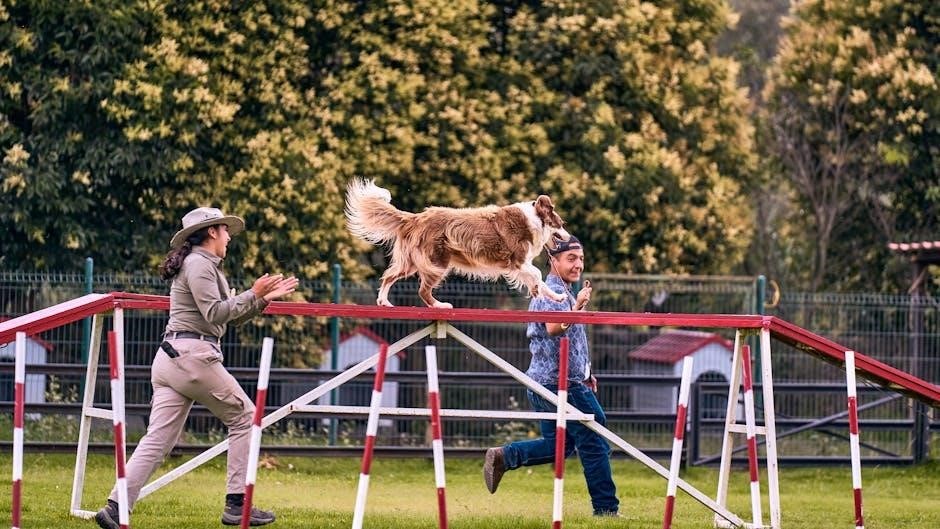
Discover a wealth of canine guidance! Explore essential commands – sit‚ stay‚ come – alongside agility-focused directions like close‚ side‚ and turn‚ all readily available in PDF format.
Embarking on dog training is a rewarding journey‚ strengthening the bond with your canine companion while fostering good behavior. A comprehensive dog training commands list PDF serves as an invaluable resource‚ offering a structured approach to teaching your dog essential skills. These commands aren’t merely tricks; they are the foundation for clear communication and a harmonious relationship.
From basic obedience – sit‚ stay‚ come – to more advanced directional cues used in agility training (close‚ side‚ out‚ turn)‚ a well-organized list ensures consistency. Understanding that dogs learn through positive reinforcement is key. Utilizing treats‚ praise‚ and a patient demeanor will yield the best results. Remember‚ each dog learns at their own pace‚ so celebrate small victories and avoid punishment. A downloadable PDF allows for convenient access during training sessions‚ whether at home‚ in the park‚ or during agility practice.
Basic Obedience Commands
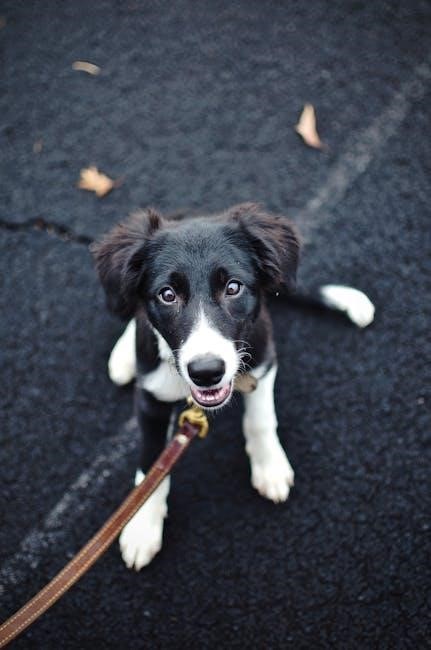
Mastering basic obedience is the cornerstone of a well-behaved dog. A dog training commands list PDF should prioritize these foundational skills. The “Sit” command establishes control and calmness. “Stay” builds self-discipline‚ crucial for safety. The “Come/Recall” command is arguably the most important‚ ensuring your dog returns when called‚ potentially saving their life.
These commands aren’t complex‚ but require consistent practice and positive reinforcement. Begin in a distraction-free environment‚ gradually increasing difficulty. Short‚ frequent training sessions are more effective than long‚ infrequent ones. A PDF list provides a handy reference‚ outlining steps and troubleshooting tips. Remember to pair verbal cues with hand signals for enhanced understanding. Establishing these basics creates a solid foundation for more advanced training and a stronger‚ more trusting relationship with your furry friend.
Sit Command
The “Sit” command is often the first taught‚ forming a basis for further training. A comprehensive dog training commands list PDF will detail several methods. Lure your dog into a sit position by holding a treat near their nose and moving it back over their head. As their rear touches the ground‚ say “Sit” and reward immediately.
Alternatively‚ gently apply pressure to their lower back while saying the command. Consistency is key; use the same verbal cue and hand signal each time. Fade the lure gradually‚ relying more on the verbal command. Correct any attempts to jump or lie down. A well-executed “Sit” demonstrates control and calmness; Practice in various locations and with increasing distractions. Refer to your PDF guide for troubleshooting common issues and maintaining positive reinforcement.
Stay Command
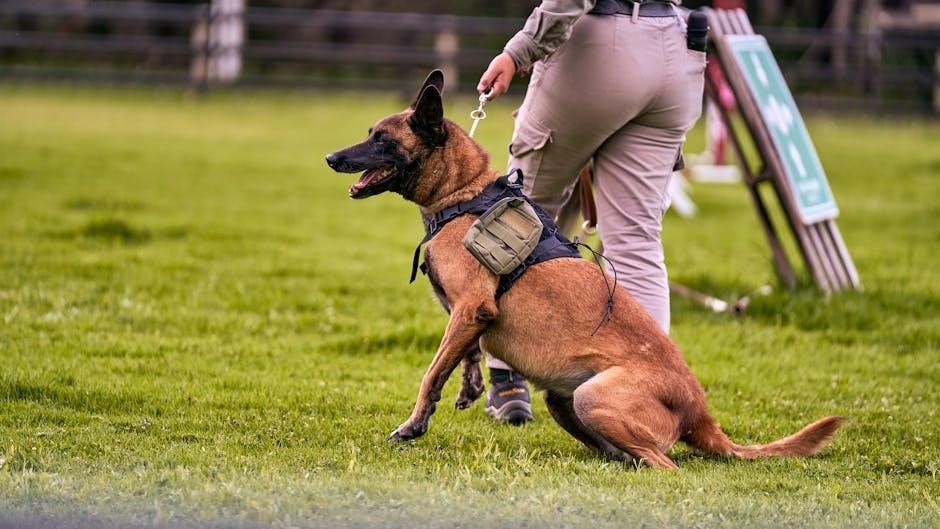
Building upon “Sit‚” the “Stay” command teaches self-control. A detailed dog training commands list PDF emphasizes a gradual approach. Begin with your dog in a “Sit.” Hold your hand up‚ palm facing them‚ and firmly say “Stay.” Initially‚ aim for just a few seconds‚ rewarding success with praise and a treat.
Slowly increase the duration‚ adding seconds incrementally. Introduce distance by taking a small step back while maintaining the “Stay” signal. If your dog breaks the stay‚ calmly return them to the “Sit” and start again. Avoid repeating the command excessively; A PDF resource will highlight common mistakes‚ like releasing too early or expecting too much too soon. Practice in different environments‚ gradually increasing distractions. Remember‚ patience and positive reinforcement are crucial for a reliable “Stay.”
Come/Recall Command
The “Come” or “Recall” command is arguably the most vital for safety. A comprehensive dog training commands list PDF stresses making yourself the most rewarding thing in your dog’s environment. Start in a quiet‚ enclosed space. Say your dog’s name followed by “Come!” in a cheerful tone. As they approach‚ back away slightly to encourage movement.
Reward enthusiastically with high-value treats and praise. Gradually increase the distance and introduce distractions. Never punish your dog for eventually coming‚ even if it takes time. A PDF guide will detail how to proof the recall in various settings. Use a long leash for initial outdoor practice. Avoid using “Come” when you need to do something your dog dislikes (like nail trimming) to maintain positive association. Consistent practice and positive reinforcement are key to a reliable recall.
Directional Commands (Agility Focus)
A detailed dog training commands list PDF highlights the importance of directional cues for agility and advanced obedience. These commands – Close‚ Side‚ Out‚ Right‚ Left‚ Turn‚ Switch‚ and Go – require precision and clear communication. “Close” directs the dog towards your left side‚ “Side” keeps them moving alongside you‚ and “Out” sends them away from your side.
“Right” and “Left” indicate turns‚ while “Turn” is a more general directional change. “Switch” instructs the dog to change sides relative to you. “Go” sends the dog forward‚ often towards a specific target. Mastering these requires breaking down each command into small steps‚ using positive reinforcement‚ and consistent hand signals. A PDF resource will often include diagrams illustrating proper body positioning and signal timing for optimal clarity and performance during agility courses.
Close Command
A comprehensive dog training commands list PDF details the “Close” command as crucial for agility and heel work. This directs your dog to move quickly to your left side‚ positioning them closely beside you. Begin training by luring your dog with a treat towards your left‚ simultaneously saying “Close.”
Reward immediately when they reach the correct position. Gradually fade the lure‚ relying more on the verbal cue and a subtle hand signal – often a left-hand gesture. Consistency is key; practice in various environments to generalize the behavior. A well-executed “Close” allows for seamless transitions during agility courses and maintains control during walks. The PDF resource should emphasize short‚ frequent training sessions and positive reinforcement to build a strong association.
Side Command
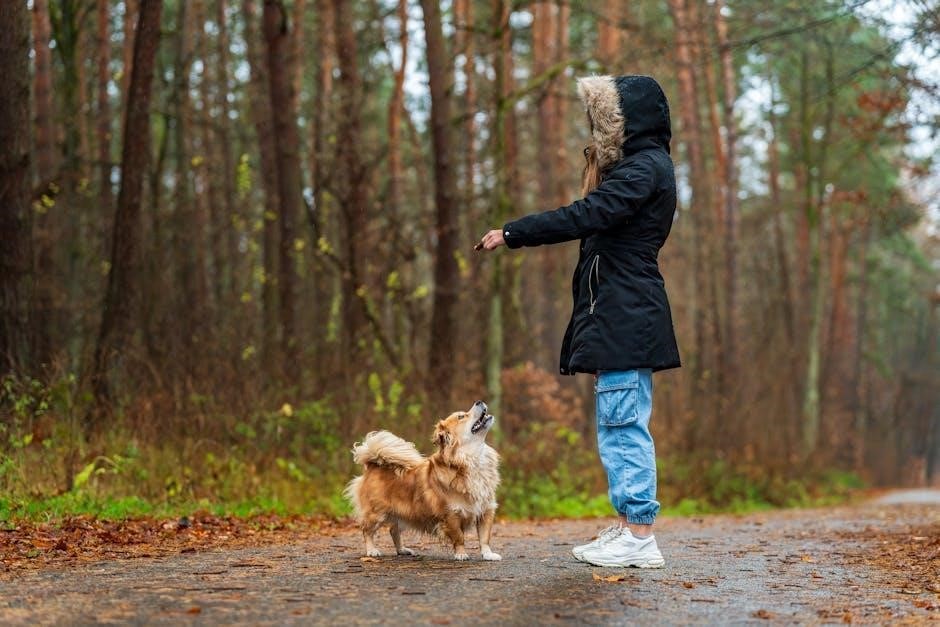
A detailed dog training commands list PDF highlights the “Side” command as fundamental for maintaining a consistent position during heeling and navigating agility obstacles. This cue instructs your dog to move alongside you‚ typically on your left‚ maintaining a specific distance. Initiate training by luring your dog into the desired position with a treat‚ uttering “Side” as they move.
Reward precise positioning. Gradually reduce the lure‚ relying on the verbal cue and a subtle body signal. Practice in diverse locations to ensure reliability. A solid “Side” command is invaluable for controlled walks and precise maneuvering in agility. The PDF should stress positive reinforcement and short‚ focused sessions. Mastering this command builds a strong partnership and enhances overall control‚ ensuring a responsive and attentive canine companion.
Out Command
A comprehensive dog training commands list PDF emphasizes the “Out” command as crucial for safety and impulse control. This command instructs your dog to immediately release something from their mouth‚ preventing ingestion of harmful objects or resolving resource guarding issues. Begin training with a low-value item‚ offering a high-value trade. As your dog drops the item‚ say “Out” and reward generously.

Gradually increase the value of the item‚ ensuring the trade remains appealing. Consistency is key; use the same cue each time. The PDF should advise against punishment‚ focusing instead on positive reinforcement. Practice with various objects in different environments. A reliable “Out” command is vital for preventing emergencies and fostering a cooperative relationship. It’s a cornerstone of responsible dog ownership‚ promoting both safety and trust.
Right Command
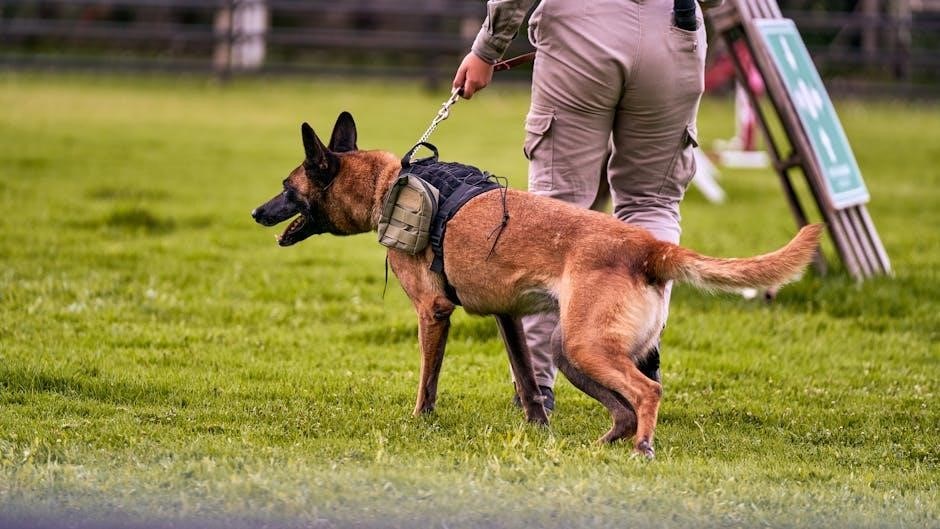
A detailed dog training commands list PDF highlights the “Right” command as fundamental for agility and directional control. This cue directs your dog to move to your right side‚ maintaining a specific position. Begin by luring your dog with a treat‚ guiding them to your right while saying “Right.” Reward immediately upon reaching the correct position.
Gradually fade the lure‚ relying solely on the verbal cue and hand signal (typically pointing to your right). Practice in a distraction-free environment‚ then progressively introduce challenges. The PDF stresses the importance of clear communication and consistent reinforcement. Ensure your body language aligns with the command. A well-trained “Right” command enhances responsiveness and precision‚ crucial for navigating agility courses or simply enjoying controlled walks. It builds a stronger connection and understanding between you and your canine companion.
Left Command
A comprehensive dog training commands list PDF emphasizes the “Left” command as a vital component of directional training‚ particularly within agility exercises. This directs your dog to move to your left side‚ maintaining a designated position. Initiate training by luring your dog with a treat‚ guiding them to your left while clearly stating “Left.” Immediate reward reinforces the desired behavior.
Progressively diminish the lure‚ transitioning to a verbal cue paired with a distinct hand signal – typically pointing towards your left. Begin practice in a calm‚ distraction-minimal setting‚ then gradually introduce increasing levels of challenge. The PDF underscores the significance of consistent reinforcement and unambiguous communication. Ensure your body language complements the command. Mastering the “Left” command fosters responsiveness and precision‚ essential for agility and controlled walks‚ strengthening the bond with your dog.
Turn Command
A detailed dog training commands list PDF highlights the “Turn” command as crucial for enhancing a dog’s responsiveness and agility. This command instructs the dog to rotate 180 degrees‚ changing direction. Begin by luring your dog into a circular motion with a treat‚ simultaneously saying “Turn.” Reward immediately upon completion of the turn.
Gradually phase out the lure‚ relying more on the verbal cue and a clear hand signal – often a circular motion with your hand. Practice in a quiet environment initially‚ then introduce distractions. The PDF stresses consistency and positive reinforcement. Ensure your body language guides the turn. Mastering this command improves maneuverability during agility courses and enhances control during walks‚ fostering a stronger connection and understanding between you and your canine companion.
Switch Command
A comprehensive dog training commands list PDF details the “Switch” command‚ primarily used in multi-dog households or advanced training scenarios. This instructs a dog to change positions with another dog‚ or to move to the opposite side of the handler. Begin with two dogs‚ each on either side. Use a clear verbal cue – “Switch!” – and a hand signal‚ like pointing between the dogs.
Reward both dogs immediately upon successful completion of the switch. If training a single dog‚ have them move from one side of your body to the other. The PDF emphasizes patience and breaking the command into smaller steps. Consistency is key; This command enhances focus‚ responsiveness‚ and coordination‚ proving invaluable in competitive dog sports and managing multiple pets effectively‚ building a stronger bond through teamwork.
Go Command
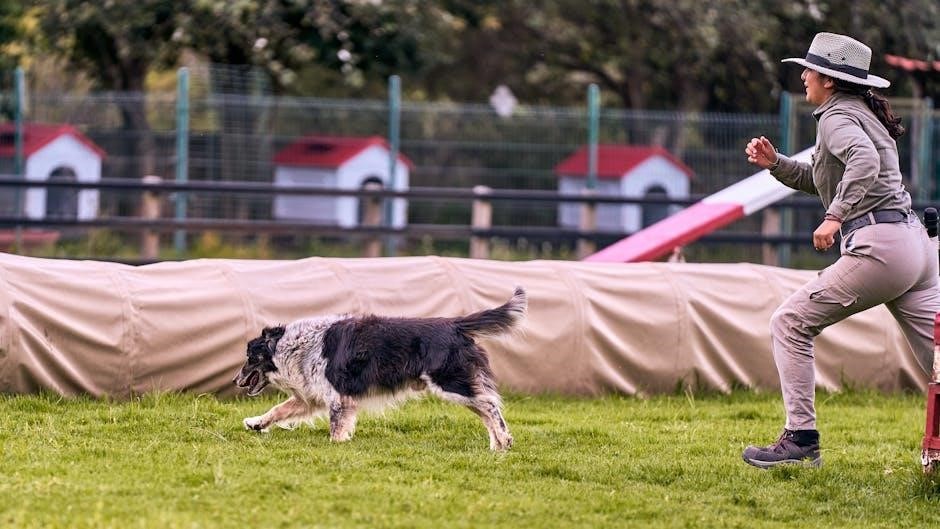
A detailed dog training commands list PDF highlights the “Go” command as a versatile tool for directing your dog’s movement. It’s often used in agility training to send a dog towards a specific target – a jump‚ tunnel‚ or designated area. Start by associating the word “Go” with enthusiastic encouragement and a visible target.
Initially‚ use a short distance and reward generously upon reaching the target. Gradually increase the distance and complexity; The PDF stresses the importance of clear body language; point towards the target as you give the command. Avoid using “Go” in everyday conversation to prevent confusion. Mastering “Go” builds drive‚ confidence‚ and responsiveness‚ essential for both competitive agility and practical off-leash control‚ fostering a dynamic partnership with your canine companion.
Trick Training Commands
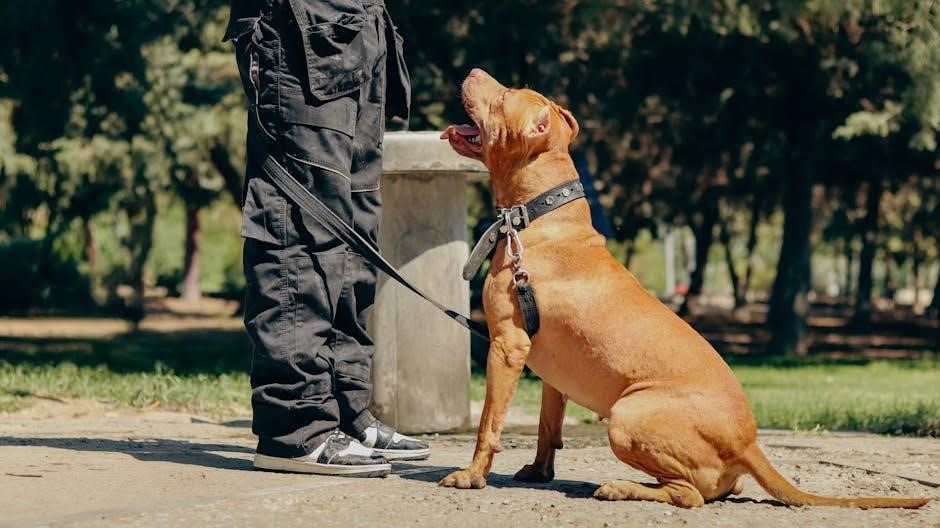
A comprehensive dog training commands list PDF expands beyond basic obedience into the fun realm of trick training! These commands – rollover‚ beg‚ back-up‚ and more – enhance the bond with your dog and provide mental stimulation. The PDF emphasizes positive reinforcement techniques‚ utilizing treats and praise to shape desired behaviors.
Trick training isn’t just for entertainment; it improves focus‚ coordination‚ and problem-solving skills. Start with simple tricks and gradually increase the difficulty. Break down complex tricks into smaller‚ manageable steps. The PDF often details how to “lure” a dog into position using a treat‚ then add the verbal cue. Consistency and patience are key. Mastering tricks builds confidence in both dog and owner‚ creating a joyful and rewarding training experience.
Rollover Command
A detailed dog training commands list PDF often dedicates specific sections to trick training‚ and the “rollover” command is a popular starting point. Begin with your dog in a “down” position. Lure their nose towards their shoulder with a high-value treat‚ encouraging them to shift their weight. As they follow the lure‚ continue guiding it around‚ prompting them to roll onto their back and then fully over.
Initially‚ reward any attempt at movement in the right direction. Gradually‚ only reward a complete rollover. Once consistent‚ introduce the verbal cue “rollover” just before initiating the lure. Fade the lure over time‚ relying more on the verbal command and hand gesture. Patience is crucial; some dogs grasp this quickly‚ while others need more repetition. Celebrate successes with enthusiastic praise and treats!
Beg Command
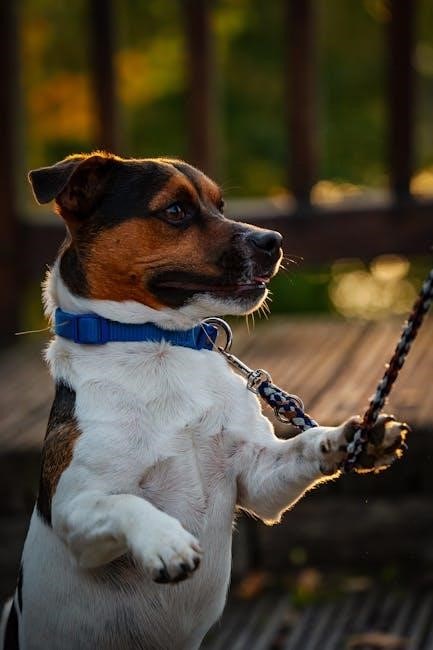
A comprehensive dog training commands list PDF frequently includes fun tricks like “beg.” This command involves teaching your dog to sit up on their hind legs‚ often resembling a begging posture. Start with your dog in a “sit” position. Hold a high-value treat slightly above their head‚ encouraging them to lift their front paws off the ground to reach for it.
As they lift‚ say “beg.” Initially‚ reward even a slight lift. Gradually increase the duration they need to hold the position to receive the treat. Ensure their back remains relatively straight; avoid encouraging an overly arched position. Once consistent‚ fade the lure‚ relying on the verbal cue and a slight upward hand gesture. Remember to keep training sessions short and positive‚ reinforcing with praise and rewards.
Back-Up Command
A detailed dog training commands list PDF often features the “back-up” command‚ a useful skill for maneuvering your dog in tight spaces or during agility training. Begin by standing facing your dog. Gently apply pressure on their chest with your hands‚ simultaneously saying “back-up.” As they take a step backward‚ immediately reward them with praise and a treat.
Gradually increase the number of steps they need to take backward before receiving the reward. Ensure you’re moving with them‚ maintaining gentle pressure and encouragement. Avoid pushing forcefully. Once they understand the concept‚ start phasing out the physical prompt‚ relying more on the verbal cue and a subtle backward hand gesture. Consistency and positive reinforcement are key to success with this command.
Puppy Training & Schedule Integration
Integrating training into a puppy’s daily schedule‚ often found within a comprehensive dog training commands list PDF‚ is crucial for success. A structured routine helps puppies learn quickly and consistently. Begin with short‚ frequent training sessions – 5-10 minutes several times a day – coinciding with their natural energy levels.
A printable puppy planner can be invaluable for tracking potty breaks‚ feeding times‚ and training sessions. Schedule dedicated playtime‚ socialization opportunities‚ and rest periods. Potty training commands should be paired with a consistent schedule of outdoor trips‚ especially after waking up‚ eating‚ and playing. Remember‚ patience and positive reinforcement are paramount. A well-integrated schedule fosters a confident and well-behaved puppy.
Potty Training Commands & Schedule
Effective potty training relies on consistent commands and a predictable schedule‚ often detailed within a dog training commands list PDF. Choose a specific phrase like “Go potty” or “Do your business” and use it every time you take your puppy outside. Immediately reward successful elimination with praise and a small treat.
A sample schedule might include potty breaks first thing in the morning‚ after each meal‚ after naps‚ after playtime‚ and right before bedtime. Puppies typically need to relieve themselves every 2-3 hours. Watch for signs like circling‚ sniffing‚ or squatting. Avoid punishment for accidents; instead‚ thoroughly clean the area to eliminate odors. Consistency is key to establishing good habits.
Resources & Further Learning
Expand your dog training knowledge beyond a simple commands list PDF! Numerous online forums‚ like DogForum.de‚ offer vibrant communities for sharing tips and seeking advice from experienced owners. Printable puppy planners‚ readily available online‚ help organize vet appointments‚ feeding schedules‚ and training progress.
Explore resources dedicated to specific disciplines like DiscDogging/Dog Frisbee for advanced training ideas. Many websites provide downloadable PDFs detailing trick training – rollover‚ beg‚ and more – to enhance your bond. Don’t hesitate to consult with professional dog trainers for personalized guidance. Remember to verify the credibility of online sources and prioritize positive reinforcement methods. Continued learning benefits both you and your canine companion!
Printable Puppy Planner Information
Stay organized during your puppy’s crucial development! Printable puppy planners‚ often available as editable PDFs‚ are invaluable tools for tracking essential information. These planners typically include sections for veterinary records‚ vaccination schedules‚ deworming details‚ and microchip information.
Beyond medical records‚ a good planner will help you monitor potty training progress‚ feeding times‚ and sleep patterns. Dedicated spaces for noting training commands learned – referencing your dog training commands list PDF – and any behavioral observations are also beneficial. Look for planners with daily or weekly schedules to ensure consistent routines. Utilizing a planner streamlines puppy care and supports successful training‚ fostering a strong bond from the start.
Dog Forum & Community Resources
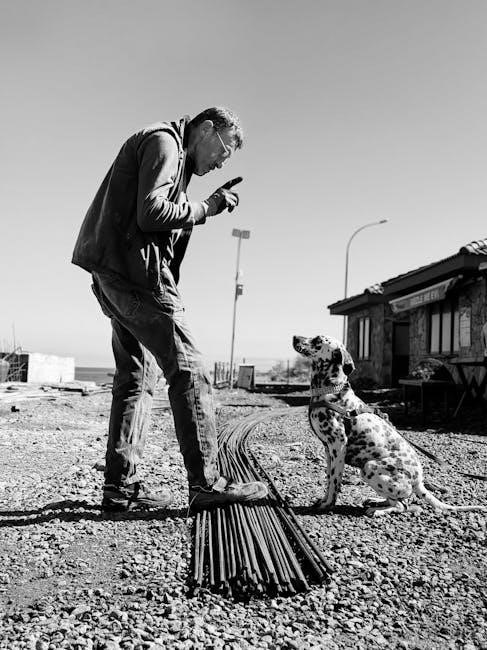
Connect with fellow dog enthusiasts and expand your knowledge! Online dog forums‚ like DogForum.de‚ provide a vibrant community for sharing experiences‚ seeking advice‚ and discussing all aspects of dog ownership‚ including training. These platforms are excellent resources for clarifying commands from your dog training commands list PDF and troubleshooting challenges.
Many forums feature dedicated sections for specific breeds‚ training methods‚ and behavioral issues. You can find valuable insights from experienced owners and professional trainers. DiscDogging communities also offer specialized knowledge. Remember to critically evaluate information and consult with a veterinarian or certified trainer for personalized guidance. Engaging with these resources fosters a supportive learning environment and enhances your dog training journey.