
hole’s human anatomy and physiology pdf
Holes Human Anatomy & Physiology: A Comprehensive Overview
“Holes” presents a foundational text for one-semester anatomy and physiology, requiring no prior science background.
Numerous editions, including Essentials and full versions, are available in PDF format, alongside digital access options.
“Holes Human Anatomy & Physiology” serves as a cornerstone resource for students embarking on their journey into the complexities of the human body. Designed specifically for a one-semester course, the textbook distinguishes itself by assuming minimal prior scientific knowledge, making it exceptionally accessible.
The text’s strength lies in its ability to bridge the gap between abstract concepts and real-world applications, particularly for those pursuing careers within the allied health fields. Students can readily access the material through various formats, including a convenient PDF version, enhancing flexibility and study options.
Furthermore, the “Learn, Practice, and Assess” system integrated throughout the book and its digital components promotes active learning and immediate comprehension. The Essentials edition offers a condensed version, while the full version provides a more exhaustive exploration of anatomical and physiological principles.
Authors and Credentials
“Holes Human Anatomy & Physiology” benefits from the expertise of seasoned educators, notably Charles Welsh and Cynthia Prentice-Craver. Cynthia Prentice-Craver holds an M.S. in Curriculum and Instruction and a B.S. in Exercise Science, complemented by extensive graduate coursework in biological sciences.
Her academic background directly informs her effective teaching methods, both online and in traditional classroom settings. She has demonstrably contributed to the field as a contributing author for the Martin Laboratory Manual for Human Anatomy & Physiology (Third Edition) and Holes Essentials of Human Anatomy & Physiology (Fourteenth Edition).
These contributions, alongside the availability of the textbook in PDF format, highlight a commitment to accessible and comprehensive anatomical education. The authors’ credentials ensure a high standard of accuracy and pedagogical clarity within the text.
Target Audience and Prerequisites
“Holes Human Anatomy & Physiology” is specifically designed for students enrolled in one-semester anatomy and physiology courses, particularly within allied health programs. A significant strength of this textbook is its accessibility; no prior science knowledge is assumed, making it ideal for students with diverse academic backgrounds.
The text caters to those pursuing careers as technicians, assistants, or other roles requiring a foundational understanding of human body structure and function. The availability of the PDF version further broadens access for students with varying learning preferences and technological resources.
Essentially, the book aims to provide a clear and concise introduction to the subject, preparing students for more advanced studies or direct entry into healthcare professions.
Core Concepts Covered in “Holes”
“Holes” comprehensively covers cellular organization, tissues, integumentary, skeletal, and muscular systems, alongside transport, absorption, and the human life cycle—often found in PDF form.
The Cellular Level of Organization
“Holes Human Anatomy & Physiology” meticulously details the fundamental unit of life – the cell. This section explores cellular structures, including organelles and their specific functions, crucial for understanding physiological processes. It delves into membrane transport mechanisms, vital for maintaining cellular homeostasis, and cellular metabolism, outlining how cells obtain and utilize energy.
The text likely presents information on cell division (mitosis and meiosis) and cellular communication, explaining how cells interact with their environment and each other. Students can access this foundational knowledge through various editions, often available as a PDF resource, supporting a strong base for comprehending more complex systems. The “Learn, Practice, and Assess” system likely reinforces these concepts.
Tissues: Types and Functions
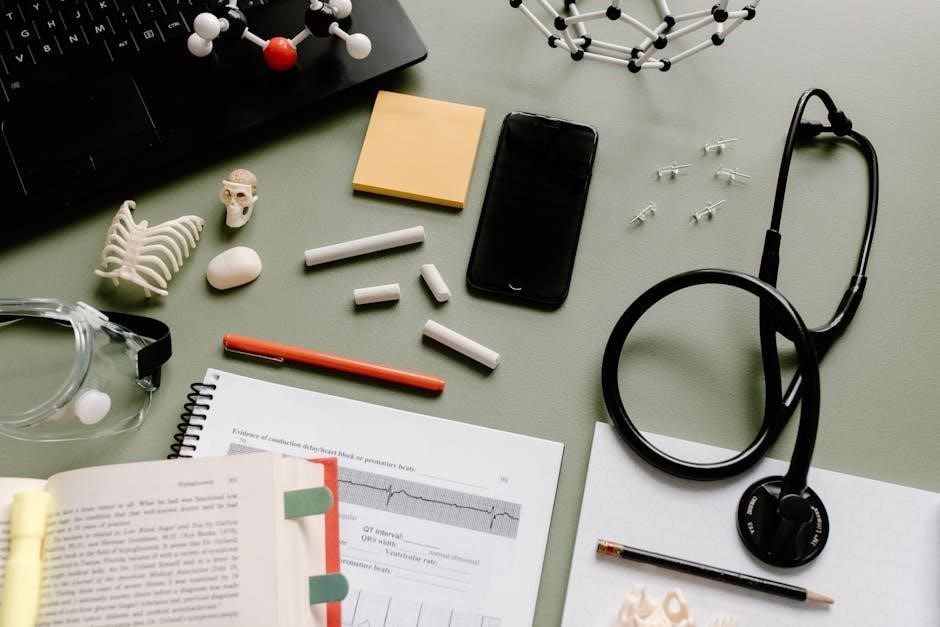
“Holes Human Anatomy & Physiology” comprehensively covers the four primary tissue types: epithelial, connective, muscle, and nervous. The text details the structural characteristics of each, linking form to function. PDF versions of the textbook likely include detailed microscopic images aiding in tissue identification.
It explains how epithelial tissues provide covering and lining, connective tissues support and connect, muscle tissues enable movement, and nervous tissues facilitate communication. Clinical correlations, a hallmark of the text, demonstrate how tissue dysfunction relates to disease. The “Learn, Practice, and Assess” system likely provides opportunities to apply this knowledge, solidifying understanding of tissue roles within the body.
Integumentary System: Structure and Physiology
“Holes Human Anatomy & Physiology” dedicates significant coverage to the integumentary system – the skin, hair, and nails. The PDF versions of the textbook likely feature detailed illustrations of skin layers (epidermis, dermis, hypodermis) and associated structures like sweat and sebaceous glands.
The text explains the skin’s vital roles in protection, temperature regulation, sensation, and vitamin D synthesis. Clinical applications within the book connect integumentary system function to conditions like burns, skin cancer, and infections. Expect the “Learn, Practice, and Assess” system to reinforce understanding of skin anatomy and physiology, potentially with case studies or interactive quizzes;
Skeletal System: Bones and Joints
The “Holes Human Anatomy & Physiology” textbook, including its PDF iterations, provides a comprehensive exploration of the skeletal system. Expect detailed coverage of bone structure – compact and spongy bone – and bone classification. The text likely illustrates various bone markings and features, crucial for understanding articulation.
Joints, their classifications (fibrous, cartilaginous, synovial), and movements are thoroughly explained. Clinical connections within the PDF may cover fractures, arthritis, and osteoporosis. The “Learn, Practice, and Assess” system likely includes labeling exercises of skeletal elements and applying knowledge to common skeletal injuries or diseases.
Muscular System: Types and Mechanics
The “Holes Human Anatomy & Physiology” textbook, accessible in PDF format, meticulously details the muscular system. It covers the three muscle types – skeletal, smooth, and cardiac – outlining their unique structures and functions. Expect in-depth explanations of muscle fiber organization, contraction mechanisms, and energy sources.
The text likely explores muscle attachments, actions, and naming conventions. Clinical Applications within the PDF may address muscle strains, muscular dystrophy, or other related conditions. The “Learn, Practice, and Assess” system probably features exercises on identifying muscles, understanding lever systems, and applying concepts to movement analysis.
Body Systems in Detail
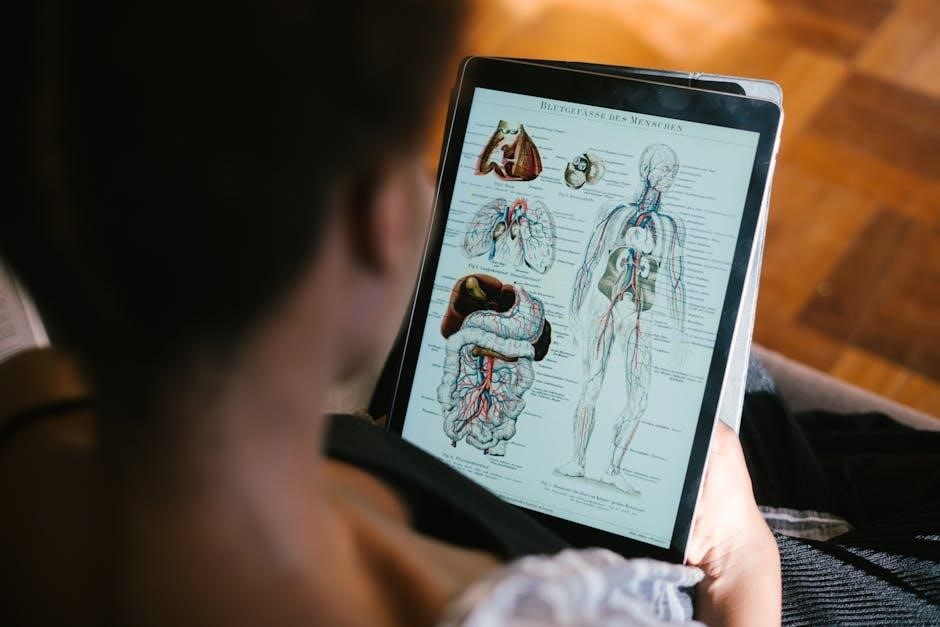
“Holes”, available as a PDF, comprehensively examines each body system—nervous, endocrine, cardiovascular, and more—providing detailed anatomical and physiological insights for students.
Nervous System: Central and Peripheral
“Holes Human Anatomy & Physiology”, often accessed as a PDF, dedicates significant coverage to the intricate nervous system. The text meticulously details the central nervous system – the brain and spinal cord – exploring their structures and functions.
Furthermore, it thoroughly examines the peripheral nervous system, including cranial and spinal nerves, and their roles in transmitting signals throughout the body. The book explains how these components work together to facilitate sensory perception, motor control, and higher-level cognitive processes.
Clinical applications are integrated, demonstrating how nervous system dysfunction manifests as disease, enhancing student understanding and relevance. The “Learn, Practice, and Assess” system reinforces these concepts.
Endocrine System: Hormones and Regulation
“Holes Human Anatomy & Physiology”, readily available as a PDF resource, provides a comprehensive exploration of the endocrine system. The textbook details the major endocrine glands – pituitary, thyroid, adrenal, and others – and their respective hormone production.
It elucidates the mechanisms of hormone action, including receptor binding and cellular effects, emphasizing the crucial role of hormones in regulating various physiological processes like metabolism, growth, and reproduction.
The text also addresses feedback loops that maintain hormonal homeostasis, and clinical correlations illustrate endocrine disorders. The integrated “Learn, Practice, and Assess” system aids in mastering these complex concepts.
Cardiovascular System: Heart and Vessels
“Holes Human Anatomy & Physiology”, accessible in PDF format, thoroughly examines the cardiovascular system. The text details the anatomy of the heart – chambers, valves, and associated vessels – and traces the pathway of blood circulation.
It explains cardiac muscle physiology, the conduction system, and the regulation of heart rate and blood pressure. Vascular structures, including arteries, veins, and capillaries, are described in relation to their functions in nutrient and waste exchange.
Clinical applications, a hallmark of the text, connect anatomical structures to common cardiovascular diseases. The “Learn, Practice, and Assess” system reinforces understanding of this vital system.
Respiratory System: Gas Exchange
The “Holes Human Anatomy & Physiology” textbook, available as a PDF, provides a detailed exploration of the respiratory system. It covers the anatomy of the upper and lower respiratory tracts, including the nasal cavity, pharynx, larynx, trachea, bronchi, and alveoli.
The text elucidates the mechanics of breathing – inhalation and exhalation – and the role of respiratory muscles. Emphasis is placed on the crucial process of gas exchange: oxygen uptake and carbon dioxide removal at the alveolar-capillary interface.
Clinical correlations within the “Holes” text link respiratory structures to common conditions, enhancing comprehension for allied health students.
Digestive System: Breakdown and Absorption
The “Holes Human Anatomy & Physiology” textbook, accessible in PDF format, comprehensively details the digestive system’s functions. It explores the anatomy of the alimentary canal – from the mouth to the anus – and associated accessory organs like the liver and pancreas.
The text meticulously explains mechanical and chemical digestion, outlining how carbohydrates, proteins, and fats are broken down into absorbable units. It further clarifies the processes of absorption within the small intestine, including villi and microvilli’s role.
“Holes” integrates clinical applications, connecting digestive system anatomy to common disorders, aiding student understanding.
Urinary System: Filtration and Excretion
The “Holes Human Anatomy & Physiology” textbook, available as a PDF resource, provides a detailed examination of the urinary system. It covers the kidneys’ structure – nephrons, glomeruli, and tubules – and their crucial role in blood filtration.
The text elucidates the processes of tubular reabsorption and secretion, explaining how the kidneys regulate blood composition and maintain fluid balance. It details urine formation and the pathways of urine transport through the ureters, bladder, and urethra.
“Holes” also connects urinary system anatomy to clinical scenarios, enhancing comprehension of related pathologies and their impact on overall health.
Specialized Areas of Focus
“Holes” delves into the lymphatic system, immunity, and reproductive systems, offering comprehensive PDF chapters. It also explores the fascinating stages of the human life cycle.
Lymphatic System and Immunity
“Holes Human Anatomy & Physiology” dedicates significant coverage to the intricate lymphatic system, detailing its crucial role in bodily defense. The text, often available as a PDF download, explains the system’s components – vessels, tissues, and organs – and their interconnected functions.
Students gain insight into the body’s immune responses, including innate and adaptive immunity, and how the lymphatic system facilitates these processes. The book clarifies the roles of lymphocytes, antibodies, and other key players in fighting off pathogens. Clinical applications are integrated, demonstrating how lymphatic system dysfunction manifests as disease.
Resources like supplemental materials and online platforms further enhance understanding of this vital system, making complex concepts accessible.
Reproductive System: Male and Female
“Holes Human Anatomy & Physiology” provides a comprehensive exploration of both the male and female reproductive systems, often accessible in PDF format. The textbook details the anatomy of reproductive organs, including the gonads, ducts, and accessory glands, emphasizing their unique structures and functions.
It thoroughly explains gametogenesis – the formation of sperm and eggs – and the hormonal regulation governing reproductive cycles. The text also covers the processes of fertilization, pregnancy, and development. Clinical correlations are integrated, discussing common reproductive health issues and disorders.
Students benefit from clear illustrations and detailed explanations, supported by supplemental resources available alongside the core textbook material.
The Human Life Cycle
“Holes Human Anatomy & Physiology” dedicates significant attention to the human life cycle, often detailed within the accessible PDF versions of the text. It traces developmental changes from fertilization through old age, examining anatomical and physiological shifts at each stage.
The textbook explores embryological development, childhood growth, adolescence, adulthood, and the aging process. It highlights how organ systems adapt and change throughout life, impacting overall function. Emphasis is placed on the interplay between genetics, environment, and lifestyle factors.
Clinical applications are interwoven, discussing age-related diseases and health considerations. Students gain a holistic understanding of human development and the interconnectedness of bodily systems.

Learning Resources and Features
“Holes” utilizes a “Learn, Practice, and Assess” system, enhanced by digital content and PDF access, for effective student engagement and comprehension.
“Learn, Practice, and Assess” System
“Holes Human Anatomy & Physiology” integrates a robust “Learn, Practice, and Assess” system throughout the textbook and accompanying digital resources. This pedagogical approach is designed to reinforce understanding and facilitate immediate application of core concepts. Students benefit from opportunities to actively engage with the material, moving beyond passive reading.
The system includes various learning tools, such as practice questions, clinical applications, and assessment exercises, all readily available, potentially in PDF format alongside digital platforms. This comprehensive structure supports students pursuing careers in allied health, ensuring they grasp difficult concepts and build a strong foundation in human anatomy and physiology; The system aims to solidify knowledge retention and prepare students for success;
Clinical Applications and Relevance
“Holes Human Anatomy & Physiology” distinguishes itself by emphasizing the clinical relevance of anatomical and physiological principles. The textbook consistently connects core concepts to real-world healthcare scenarios, making the material more engaging and understandable for students aspiring to careers in the allied health field.
This approach helps students appreciate how foundational knowledge translates into practical applications, enhancing their ability to understand and address patient care challenges. Access to the text, including potentially in PDF format, provides numerous case studies and examples illustrating the clinical significance of each body system. This focus ensures students are well-prepared for the demands of a healthcare profession.
Laboratory Manual Integration
“Holes Human Anatomy & Physiology” is frequently paired with a dedicated laboratory manual to enhance the learning experience. The Martin Laboratory Manual for Human Anatomy & Physiology, Third Edition, serves as a key companion, providing hands-on activities that reinforce concepts presented in the main text.
These labs allow students to apply their knowledge through dissection, observation, and experimentation. While the core textbook may be accessible in PDF format, the laboratory manual typically requires a separate purchase. This integrated approach—combining theoretical understanding with practical application—is crucial for mastering the complexities of human anatomy and physiology, fostering a deeper and more lasting comprehension.
Editions and Availability
“Holes” offers both a comprehensive full version and an Essentials edition, catering to varied course needs; PDF access is often available online.
Holes Essentials of Human Anatomy & Physiology
“Holes Essentials of Human Anatomy & Physiology” is specifically designed for a condensed, one-semester anatomy and physiology course. This edition thoughtfully assumes students may lack prior science knowledge, making complex topics accessible. It effectively supports core concepts through the integration of relevant clinical applications, bridging the gap between theory and practical healthcare careers.
The textbook utilizes a robust “Learn, Practice, and Assess” system throughout both the printed text and accompanying digital resources, promoting immediate comprehension and retention. Students can find PDF versions available through various online platforms, though legitimate access often requires purchase or institutional subscriptions. The 13th edition, for example, is accessible via the Internet Archive.

Cynthia Prentice-Craver contributed to both the Holes Essentials and the Martin Laboratory Manual, demonstrating a commitment to effective pedagogical resources.
Full Version vs. Essentials Edition
“Holes Human Anatomy & Physiology” exists in two primary formats: a comprehensive full version and the streamlined “Essentials” edition. The Essentials version, geared towards shorter courses, prioritizes core concepts and minimizes detail, making it ideal for allied health students. Both versions utilize the effective “Learn, Practice, and Assess” system.
The full version provides a more exhaustive exploration of anatomical structures and physiological processes, suitable for students requiring a deeper understanding. Both editions are frequently available as PDF downloads, though sourcing legitimate copies is crucial.
While the Essentials edition, like the 13th edition available on the Internet Archive, offers a focused approach, the full version provides a broader foundation. ISBN 0073403725 and 978-0073403724 identify the PDF format.
Digital and PDF Access
“Holes Human Anatomy & Physiology” offers various digital access options alongside traditional print copies. Students can often find the textbook available through online learning platforms, enhancing study with interactive features. PDF versions are also frequently sought, providing convenient offline access for review and study purposes.
However, it’s vital to obtain PDF copies from reputable sources like authorized retailers to ensure legality and quality. Websites like cheaptodownload.com offer access, but verifying authenticity is key. The Internet Archive hosts editions, like the 13th, in EPUB and PDF formats.
Digital access often integrates with the “Learn, Practice, and Assess” system, providing immediate feedback and reinforcing key concepts. Always prioritize legitimate sources for PDF downloads.

Resources for Students
“Holes” students benefit from online platforms, study guides, and practice questions. PDF versions and the Internet Archive offer supplemental learning materials.
Online Learning Platforms
“Holes Human Anatomy & Physiology” is frequently supported by robust online learning platforms designed to enhance student comprehension. These platforms often integrate the “Learn, Practice, and Assess” system directly into the digital content, providing immediate feedback and reinforcing key concepts.
Students can access materials, including potentially downloadable PDF resources, through various institutional portals or directly from the publisher. The Internet Archive also provides access to older editions, offering alternative study options. These digital environments frequently include interactive exercises, quizzes, and supplementary materials to aid in mastering the complexities of human anatomy and physiology.
Furthermore, instructors often utilize these platforms to deliver course content, track student progress, and facilitate online discussions, creating a dynamic and engaging learning experience.
Study Guides and Practice Questions
To supplement the core “Holes Human Anatomy & Physiology” textbook, a variety of study guides and practice questions are available to students. These resources are designed to reinforce learning and prepare for assessments. While specific content varies, they commonly include chapter summaries, key term definitions, and detailed diagrams.
Practice questions often mirror the format and difficulty of those found in the textbook and on exams, aiding in test preparation. Some resources may be available as downloadable PDF files, while others are integrated into online learning platforms.
Students can also find supplemental materials, including flashcards and self-assessment quizzes, to further solidify their understanding of complex anatomical and physiological concepts.
Supplemental Materials
Beyond the core textbook and study guides, a range of supplemental materials enhance the learning experience with “Holes Human Anatomy & Physiology”. These often include access to online resources, such as interactive animations and virtual labs, providing dynamic visualizations of complex processes.
The Martin Laboratory Manual for Human Anatomy & Physiology, a contributing author work by Cynthia Prentice-Craver, complements the textbook with hands-on exercises. Furthermore, digital resources, potentially available as PDF downloads, offer additional practice questions and clinical case studies.
Instructors may also provide custom materials tailored to their specific course objectives, enriching the overall educational experience.